
List (in no particular order☺️)
It does not include undergraduates, postgraduates and doctoral students
💡 Click on an item to view each person’s introduction.
Principal Investigator-Shanshan Cai
Dr. Shanshan Cai trained as an immunologist, with both her Master’s and PhD focused on infection immunology. During the final year of her PhD, she began expanding her research beyond traditional experimental immunology into computational biology and artificial intelligence. She credits this cross-disciplinary development to her two PhD supervisors: “They made me believe that an immunologist could also write good code and ask different kinds of questions.”
Her research remains grounded in immunology and experimental biology, with a particular interest in immune regulation, inflammation, disease mechanisms, and the tumour microenvironment. Rather than treating computation as a separate research identity, she integrates multi-omics, artificial intelligence, medical imaging, real-world data, and other computational approaches when they help reveal mechanisms, prioritize biological questions, or extend experimental findings toward clinical relevance. Cancer is a major cross-cutting focus of her work, alongside broader interests in toxicology, pharmacology, drug safety, and other immune-related disease processes.
Dr. Cai also has a strong interest in translating scientific ideas beyond academia. She is a shareholder in several technology and biotechnology companies and seeks meaningful connections between basic research, clinical needs, and real-world innovation.
Outside the lab, Dr. Cai doesn’t quite fit the “stereotypical academic” mould. She enjoys dyeing her hair in bold colours and has several tattoos – none of which, she insists, affects her rigour or dedication to science. She also has a deep love for animals, which unexpectedly led her to earn an additional degree in Veterinary Science. Though she ultimately chose not to pursue veterinary practice, that training gave her a warmer, more holistic perspective on life sciences.
At Cai Lab, she strives to foster an equal, open, and inclusive environment – you can come to the lab with brightly coloured hair, share stories about your pets during group meetings, or pitch any wild idea you have. She firmly believes that great science doesn‘t require a one‑size‑fits‑all “template”, and that interesting souls and solid research are never mutually exclusive.
Her research philosophy is simple: immunology provides the biological foundation, experiments reveal the mechanisms, and the best tools are the ones that help answer the question.

Clinical Scientist-Long Li
Long is a seasoned expert with nearly 20 years of professional experience in nutrition. He is a UK Registered Dietitian and currently serves as the Chief Dietitian / Lead Nutritionist within the UK National Health Service (NHS). He has also held academic appointments as Lecturer and Senior Lecturer in Nutrition at several British universities, combining robust scholarly foundations with extensive clinical practice.
In parallel, Long leads an NHS multidisciplinary working group on head and neck cancer, seamlessly translating cutting‑edge research into clinical nutritional pathways. His outstanding translational and cross‑disciplinary leadership makes him an indispensable bridge between nutritional science and oncology practice, and a highly respected “practitioner‑leader” within the field.
On the research front, Long has long been dedicated to investigating the potential roles of dietary sources and bioactive compounds derived from traditional Chinese medicine in cancer prevention and treatment, with a broad focus on intervention strategies for various malignancies. His work systematically explores how food‑derived nutrients and natural products modulate the tumour microenvironment, immune responses, and drug sensitivity. His groundbreaking findings have been published in a leading international journal, offering novel insights into the nutrition‑oncology interface.
Algorithm Scientist-Jiashu Liao
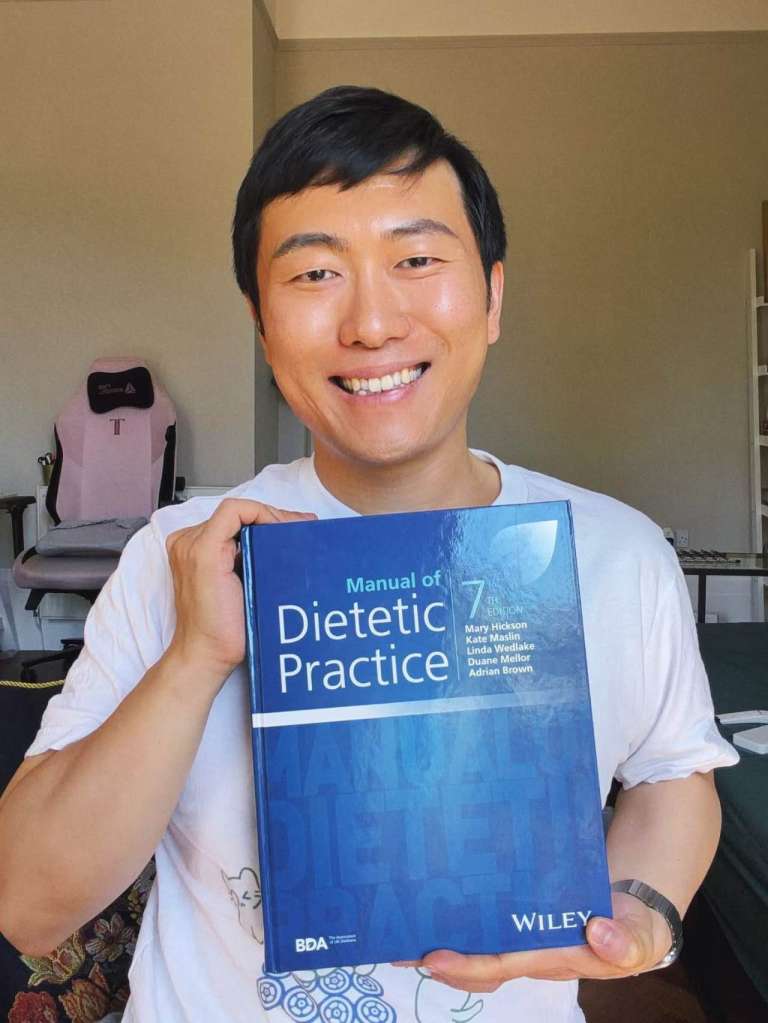
Jiashu holds a PhD in Computer Science from the University of Warwick. He has previously worked as a Research Fellow and Senior Research Fellow at Lancaster University, the University of Leeds, and the University of Glasgow. His work focuses on computer vision, machine learning, and deep learning for algorithm development and data analysis.
Outside the work, he is a devoted anime fan deeply immersed in otaku culture. Whether you follow the latest seasonal shows or swear by the classics, he’s always up for a conversation — and can switch between research mode and ACG mode without missing a beat.

Research assistant-Terry Yu
Tianyi Yu is a research assistant with a background in statistics, health informatics, and biomedical data science. He holds an MSc in Applied Statistical Modelling and Health Informatics from King’s College London and a BSc in Mathematics with Statistics for Finance from Imperial College London. His CV documents training in statistical inference, machine learning, optimization, time-series analysis, and quantitative modeling.
His research focuses on clinical and biomedical data analysis, machine learning, medical artificial intelligence, and statistical modeling. He has worked with electronic health records, medical imaging, physiological time-series, clinical text, and population-level datasets, with particular interests in trustworthy clinical AI, biomedical NLP, uncertainty estimation, external validation, psychological networks, and interpretable prediction modeling.
At Cai Lab, he contributes to the computational and data-driven components of biomedical research, including statistical analysis, machine learning, reproducible data workflows, and scientific writing.
Lab Manager-Zane Yong
Zane holds an MD degree and trained as a clinician, but he has never confined himself to the clinical realm. He possesses strong wet‑lab and dry‑lab skills, and is equally comfortable applying computational and AI methods to research. He is particularly skilled at using machine learning models to analyse clinical datasets and wet‑lab experimental data, extracting meaningful patterns from complex information.
On the dry‑lab side, he is highly proficient in handling multi‑omics data, including single‑cell, transcriptomic, metabolomic, and spatial transcriptomic data, with the ability to analyse and integrate them seamlessly.
On the wet‑lab side, he is truly versatile. Immunofluorescence, histopathology, flow cytometry, ELISA, Western blot, Co‑IP, qPCR. There is hardly a technique he hasn’t mastered.
What’s more impressive is that he already published a first‑author basic research paper in a journal with IF > 10 during his undergraduate studies. Experimental skills, data analytical abilities, and academic output. He has it all.
It is no exaggeration to say that he is the lab’s mini-PI.
Technician, Data Analyst-Jiarui Nicole Fu
Nicole holds a Bachelor’s and Master’s degree (MSci) in Cell Biology from University College London (UCL). In Cai Lab, she is primarily responsible for data curation and analysis, data visualisation, histopathological examination, and literature management.
We are delighted to share that Nicole has received an offer of admission to the MS programme at the University of Michigan — a new chapter we are truly excited about!
A fun side note: Nicole and Shanshan did not first meet through academia, but through pets — a cat and a pair of guinea pigs. That animal‑led connection eventually brought them together in the same lab.
PhD Candidate-Tao Wang
Pancreatic Cancer Immunotherapy & Drug Discovery
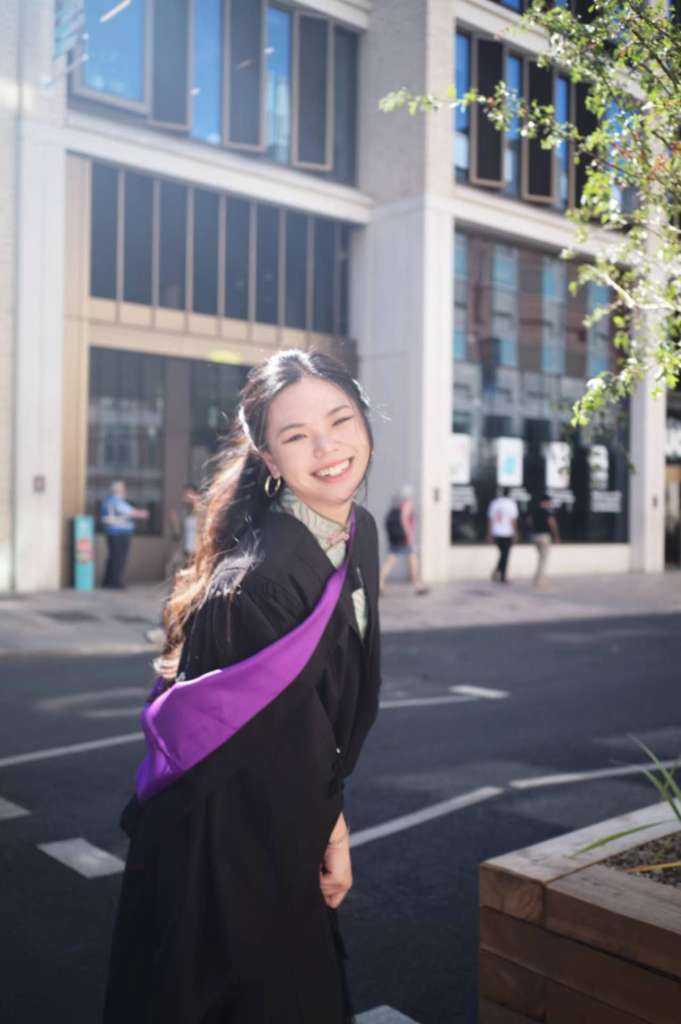
Tao is currently pursuing a PhD degree, focusing on the immunoregulatory mechanisms within the pancreatic cancer microenvironment and the development of novel drug targets. Building on his solid foundation in digestive system diseases acquired during his master’s studies, he has precisely narrowed his research vision to this “king of cancers,” aiming to explore strategies to overcome immunotherapy resistance through multi-omics and pharmacological approaches. Tao exhibits an almost obsessive dedication to research and is widely recognised in the lab as a “perpetual motion machine” no matter how late the night, you can always find him busy around the instruments.
Postdoctoral Fellow-Nansen G Lee
Nansen holds a background in Bioengineering and Biomedical Engineering, and later transitioned into immunology. At the moment, he is primarily responsible for flow cytometry, histopathology, immunofluorescence, and ELISA — all core wet‑lab techniques. Although he has a strong foundation in engineering and coding, he has now fully committed to experimental immunology, seamlessly integrating his engineering mindset with biological questions — a natural and perfect extension of his doctoral training.
Outside the lab, he is a devoted K‑pop fan and an avid League of Legends player.
